The Human Behavior Patterns Project

This project aims to model general human behavior patterns with Multi-Agent Reinforcemnent Learning (MARL). One of the most fascinating and controversial aspects of human behavior is cooperation. Therefore, this project in particular is focussed on how and under what minimal conditions multi-agent reinforcement-learning agents can learn cooperative behavior that is not explicitly rewarded, scripted, or evolutionarily inherited.
What is human behavior?
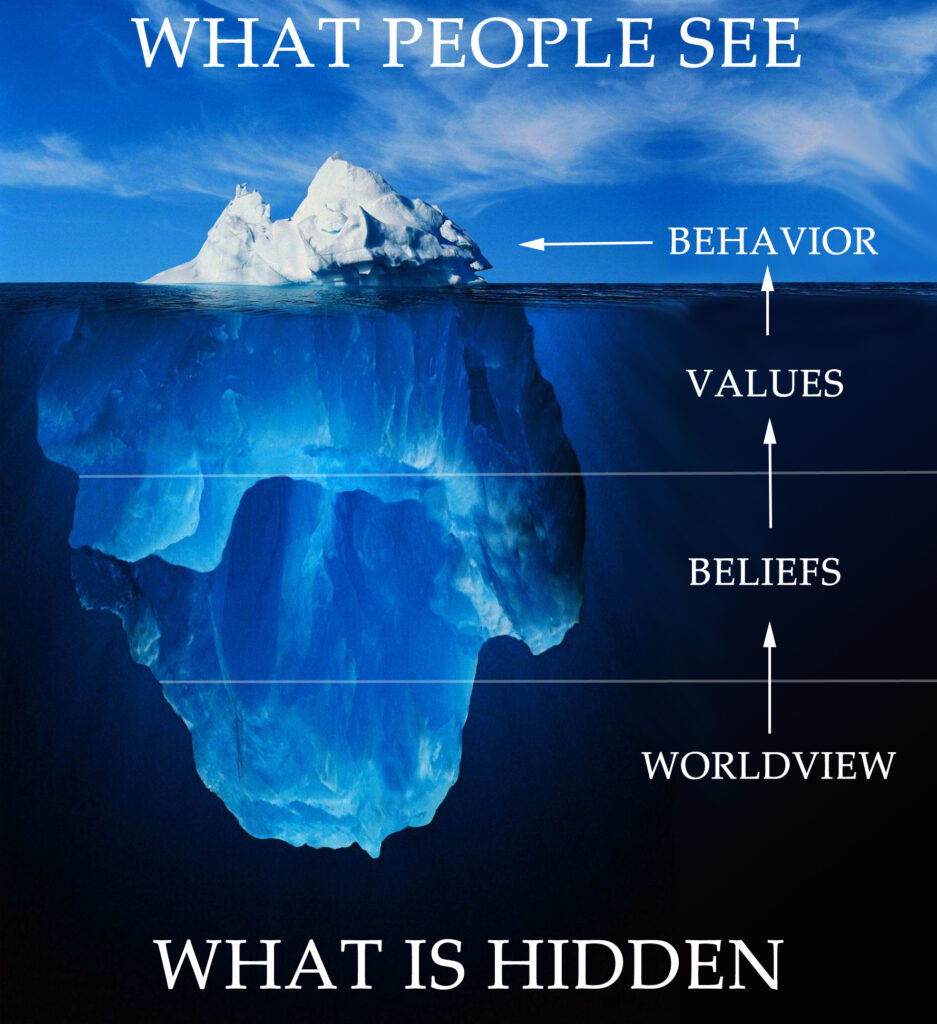
Human behavior encompasses the spectrum of actions and mannerisms exhibited by individuals within specific environments. It represents how individuals react to various stimuli or inputs, which can be internal or external, conscious or subconscious, overt or covert, and voluntary or involuntary. Typically, the term “behavior” is used to refer to the array of responses that can be observed by others, as exemplified in Display 1. However, the term human behavior in that perspective is subjective as for instance also brain waves can be detected by other people using specialized medical instruments. Therefore, we use the term of human behavior as human responses which can be detected by the natural senses humans encompasses. In that respect we like to define behaviors which are somehow naturally visible to others, which is metaphorically depicted in Display 1.
What is cooperation?
- Cooperation must somehow be something to increase (individual) fitness. Either because:
- Forced cooperation (necessary): One simply cannot do it alone ("When you can't do it alone you must do it together"); like for instance sexual mating, cooperation is a necessary condition. Or:
- Non-forced cooperation (voluntarily): One can do it alone but not as economically efficient as doing it together; like for instance division of labor (one could also rephrase it like voluntarily cooperation but that has in our view too much of an altruistic ring to it).
- There is probably a continuum of changes to achieving something alone veruss achieving something together' For instance killing a mmamoth has very low probability of succeeding alone as a human being. Making children is impossible alone. However a pin can be made alone but it's very inefficient compared to a cooperativly made pin (as the famous example of Adam Smith's pin factory showed).